As war darkens global horizons, one nation chose to act first — not react later. How India's government is shielding 1.4 billion people from the oil-to-bread crisis chain.
Crude Spike
Per Barrel
Shield Deployed
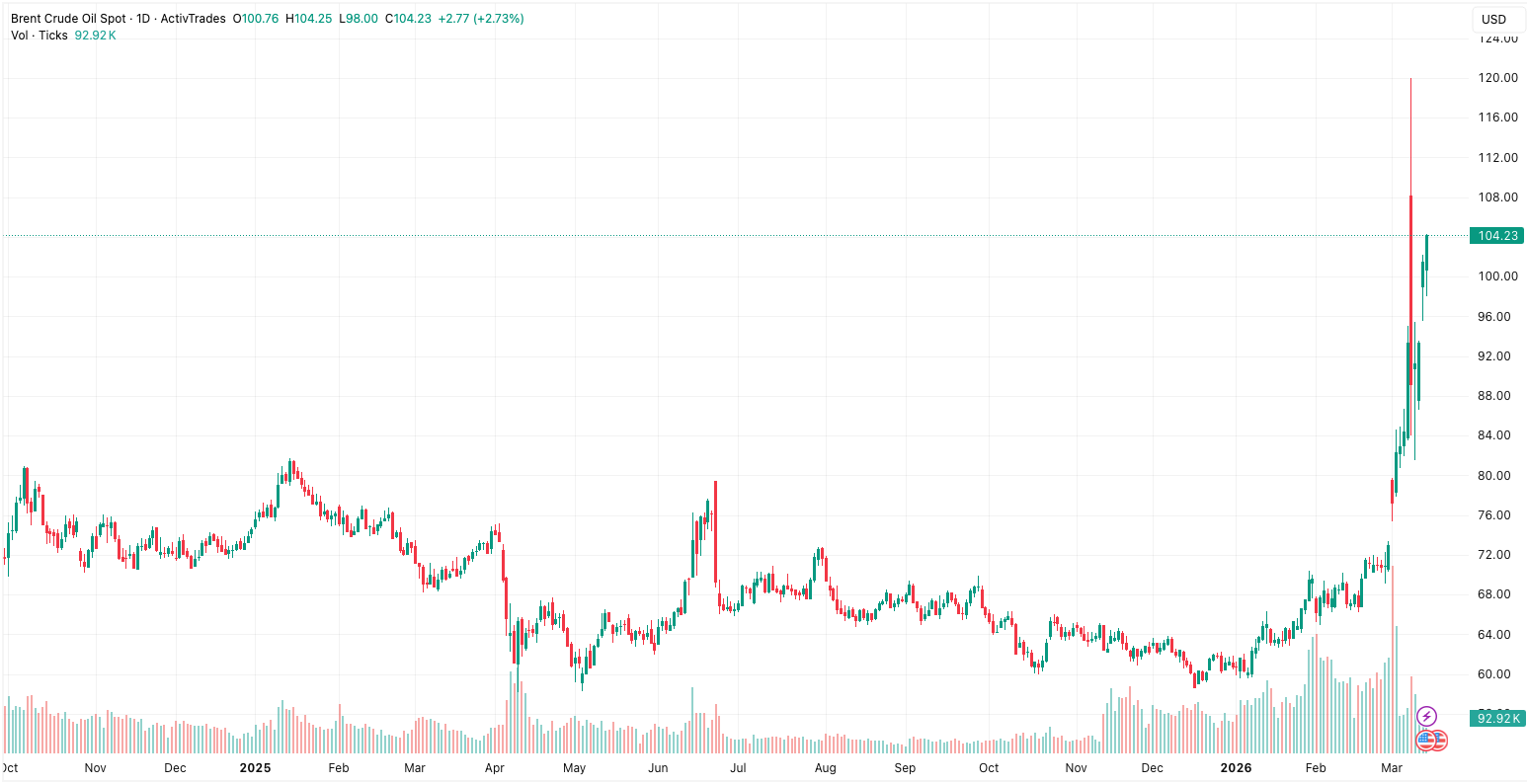
The Strait of Hormuz — through which 20% of the world's oil flows — came under direct threat as West Asia conflict escalated. Crude spiked 35% in six weeks, the steepest surge since the 2022 Ukraine shock.
Oil doesn't just fuel cars — it feeds nations. The chain: Hormuz → crude → gas/LPG → ammonia & phosphoric acid → urea & DAP → farm input costs → food prices. Every link is under stress.
Hormuz Strait Disrupted
West Asia conflict escalates — shipping routes under threat
Crude Spikes $70 → $119/bbl
+70% in 3 weeks, steepest since 2022 Ukraine shock
Gas & LPG Supply Choked
Essential Commodities Act invoked — first time since 2020
Crude Derivatives Soar
Urea & DAP feedstock (ammonia, phosphoric acid) costs spike 30%+
Food Security Threatened
Rabi/Kharif sowing costs at risk of 30% surge
Government Engages Lock
₹2.81L Cr pre-emptive grant — no new taxes, no panic
Every $10/bbl rise adds ~₹120-180 per fertiliser bag. At $119, unsubsidised input costs threaten to make sowing unviable for marginal farmers.
Gas is 70-80% of urea cost. Hormuz cuts LNG supply from Qatar/UAE.
Ammonia from gas; phosphoric acid routed through Gulf. Double hit.
Sulphur is a crude by-product — price directly tracks Brent crude.
Shipping via Suez/Hormuz spikes; freight insurance premiums up 4x.
Supplementary Demands for Grants. No new taxes. Middle class insulated. Net cash outgo ₹2.01L Cr. Pre-emptive — not reactive.
Hormuz threatens 40% of India's LPG imports. Essential Commodities Act invoked — commercial allocation restricted, domestic supply secured.
38%→22%
Commercial Cut
62%→78%
Domestic Boost
~30-35%
Demand Compression
3-4%
Inflation Dampened
Commercial LPG restricted — hotels, restaurants absorb cost at market rate.
Freed supply redirects to domestic cylinders. Import dependency reduced.
Domestic cooking fuel stays affordable → food CPI pressure released.
Projected Food CPI
7.1%
+₹530/bag
Urea Impact
+₹620/bag
DAP Impact
₹1,020/cyl
Domestic LPG
₹2.81L Cr
Fiscal Outlay
This is where we are. Without ₹2.81L Cr intervention, food CPI would breach 8.5%. The grant absorbs the derivative cost surge.
If crude sustains above $130/bbl
The ₹19,000 Cr extra fertiliser subsidy absorbs the cost shock up to ~$125-130/bbl. Beyond that threshold, a second supplementary grant or direct MSP revision becomes necessary.
If Kharif sowing is delayed or below normal area
A drought year or delayed monsoon on top of a supply shock would stress both the physical stock and the fiscal buffer simultaneously.
If LNG spot prices remain elevated past Q3
Domestic manufacturing margins compress even with the subsidy — increasing import dependence at exactly the moment import costs are highest.
The government has acknowledged this is Step 1. These are precisely the conditions that would activate Step 2.
Fertiliser Stockpile
Stocks surged 26% (vs 128 LMT) to shield Rabi/Kharif from urea/DAP shortages as oil derivatives soar.
Rural Jobs & Infra
Viksit Bharat G-RAM-G programme from Apr 1 — buffers demand shock in rural economy during wartime.
Defence Digital Spine · 5G + Strategic Communications
In a kinetic conflict scenario, food security isn't just about what's in the warehouse — it's about whether ships can dock, ports can operate, and distribution networks stay intact. The ₹35,000 Cr allocation to a defence digital backbone — spectrum, secure 5G communications, and real-time logistics monitoring — is the infrastructure layer that protects the other two locks. A disrupted port at Mumbai or Kandla during an import-dependent fertiliser season can negate a stockpile advantage overnight. Real-time defence communications also enable faster enforcement against black market networks. When the government says 'food security,' it means the entire chain: from Hormuz to the farm gate to the last-mile distribution truck. Lock 03 protects the roads the food travels on.
While the world scrambles to react, Prime Minister Narendra Modi's government moved first — approving ₹2.81 lakh crore in supplementary grants before the crisis could reach India's kitchens. No panic. No new taxes. Just decisive, pre-emptive action.
The crackdown on black marketers and hoarders was swift and unsparing. By invoking the Essential Commodities Act, the government ensured that no middleman could exploit wartime fear to inflate prices. LPG reallocation from commercial to domestic use — a bold, citizen-first decision — ensured that the poorest households wouldn't bear the burden of a war fought thousands of kilometres away.
Fertiliser stocks at 163 LMT — a 26% surge — mean India's farmers will sow Rabi and Kharif without fear. The ₹19,000 Cr extra subsidy absorbs the entire derivative cost shock, keeping farm-gate prices untouched. This isn't just a budget — it's a promise that no Indian will go hungry because of someone else's war.
"This is Step 1. As the conflict deepens, more measures will follow — but the foundation is laid. Food security locked. Rural economy buffered. Defence spine strengthened. India isn't waiting for the fire to reach its door — it's building the firewall now."
₹2.81L Cr
Pre-emptive Shield
Energy Reallocation
Invoke emergency powers
163 LMT
Food Stock Secured
Swift
Black Market Crackdown
By Mr. Harsh Patel · Tradzo Research
Research Article · Mar 15, 2026